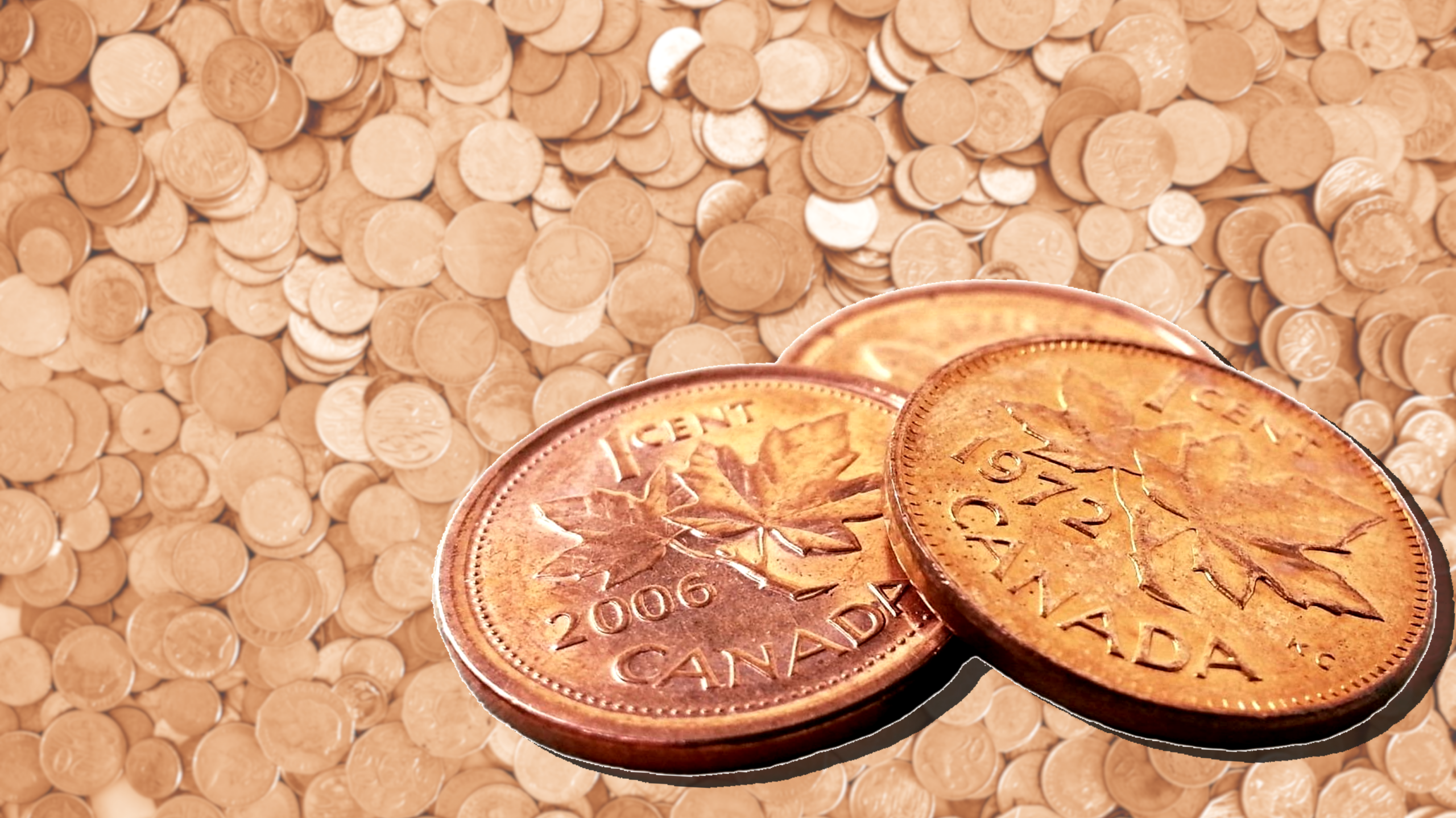
The Canadian penny may no longer be in circulation, but these small coins have a long and fascinating history. From Canada’s first one-cent pieces in 1858 to the final penny struck in 2012, Canadian cents went through numerous design, composition and manufacturing changes.
While most Canadian pennies are worth only a few cents to collectors, certain dates and varieties can be worth hundreds, thousands or, in one extraordinary case, hundreds of thousands of dollars.
So, which Canadian pennies are worth looking for?
1858: Canada’s First Penny
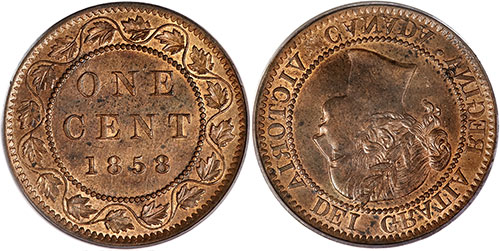
Canada’s first one-cent coins were introduced in 1858, following years of efforts to establish a domestic coinage system. The large copper coins featured Queen Victoria on the obverse and a wreath of 16 maple leaves on the reverse.
One particularly scarce variety from 1858 was struck with coin alignment rather than the medal alignment used on most Canadian cents. The difference can be seen by rotating the coin: on a coin-aligned example, the reverse appears upside down.
This variety is highly sought after. Depending on condition, current guide values can range from hundreds to several thousand dollars.
1876–1901: Victorian Varieties
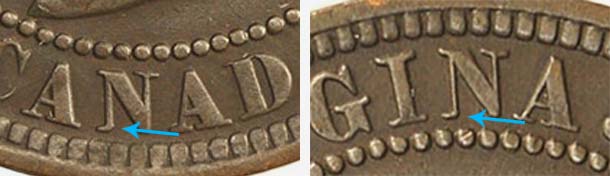
After a lengthy break in one-cent production, large cents returned in 1876. During this period, numerous varieties were produced, including differences in the leaves, lettering and dates.
One notable example is the 1881-H Single Serif N. The “H” indicates that the coin was struck at the Heaton Mint in Birmingham, England, and the variety can be identified by the distinctive serif on the N in “CANADA” and “REGINA.”
Although part of the overall 1881 mintage of two million coins, the variety is considerably more valuable than a regular example, particularly in higher grades.
1907: The Heaton Mint Penny
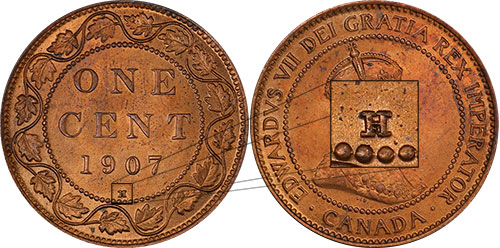
Canadian pennies continued to be struck at both the Royal Mint and the Heaton Mint during the early 20th century. The 1907-H is therefore an interesting coin for collectors.
Only about 800,000 1907-H pennies were produced, compared with approximately 2.4 million of the regular 1907 issue. The lower mintage makes the H variety more desirable, with circulated examples worth considerably more than face value.
1911: The “Godless” Penny
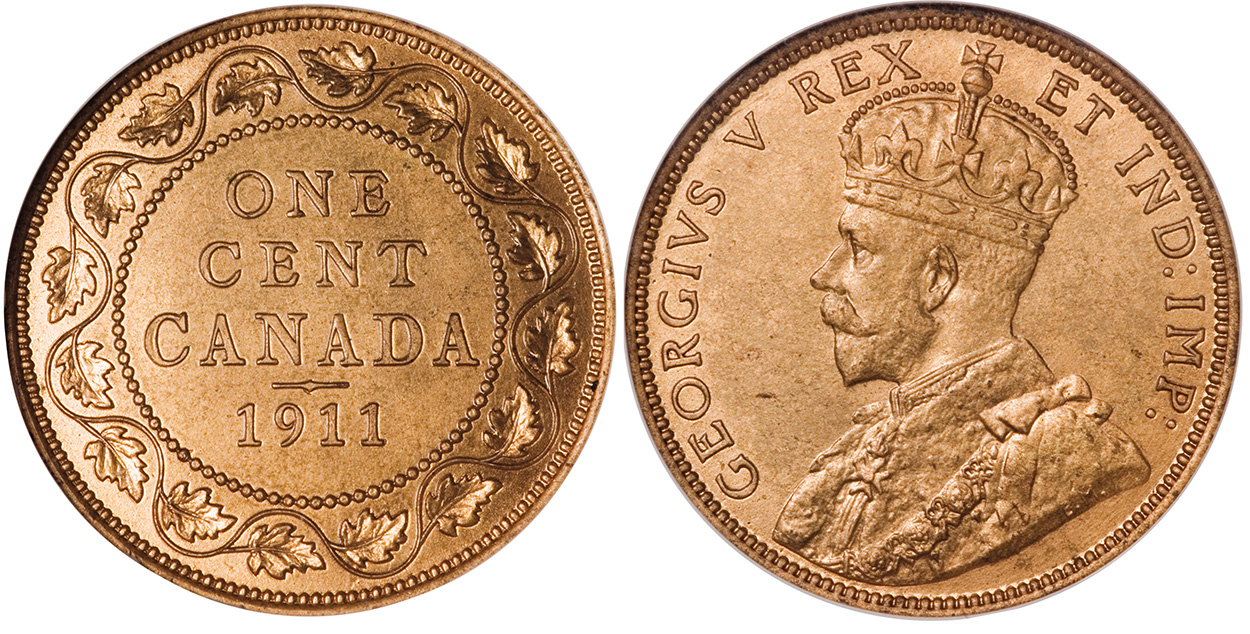
The arrival of King George V brought another change to Canadian coinage. The 1911 penny is particularly interesting because some examples were produced without the words “DEI GRA”, short for Dei Gratia, meaning “by the grace of God.”
These coins became known as “Godless” pennies and are an interesting piece of Canadian numismatic history. While standard 1911 cents aren’t exceptionally rare, the missing inscription makes the variety particularly appealing to collectors.
1920: The Penny Gets Smaller
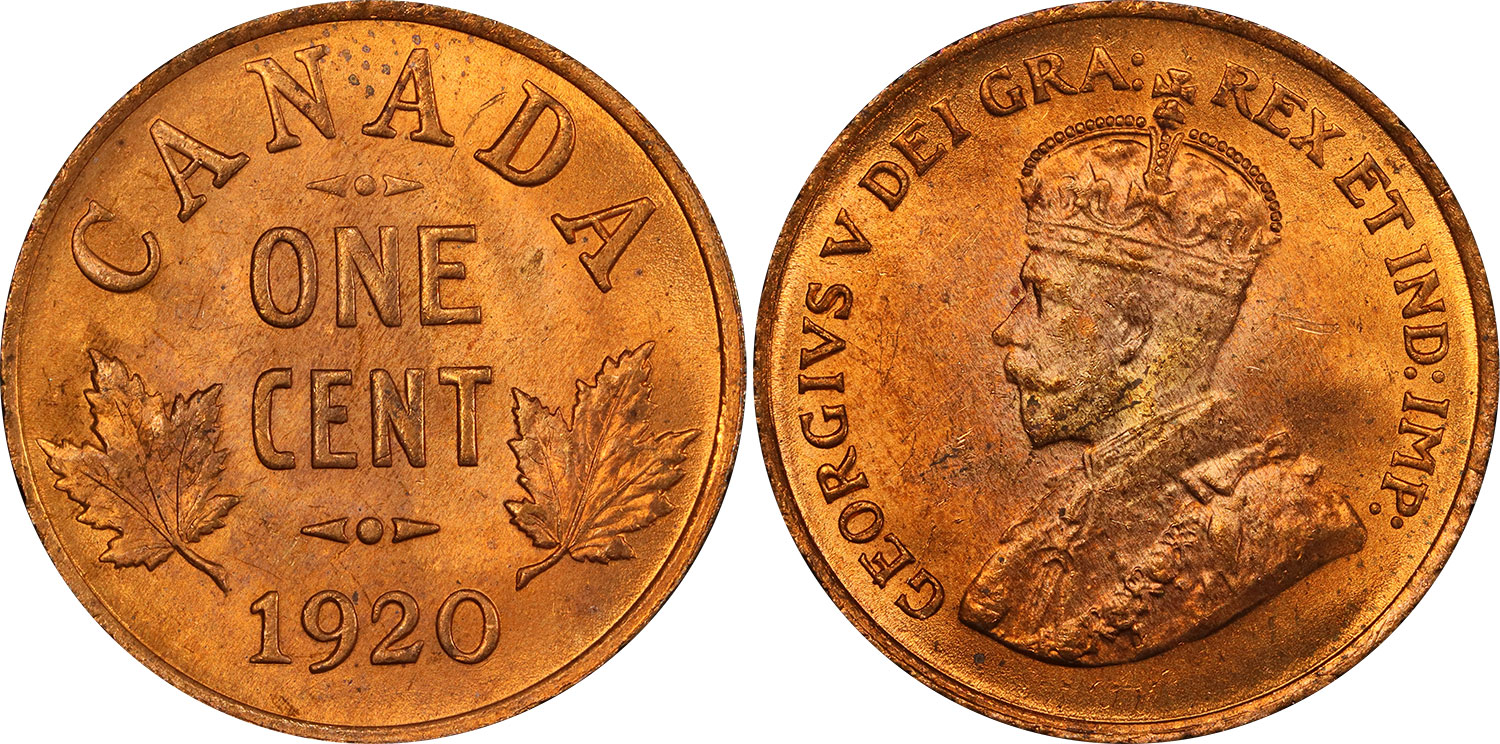
In 1920, Canada replaced its large one-cent coin with a smaller one-cent coin. Rising copper prices were one factor behind the change, and the new penny was also significantly lighter than its predecessor.
The smaller penny also introduced a new reverse design featuring two maple leaves, with the denomination and date positioned between them. This design continued through 1936. In 1937, a new reverse featuring two maple leaves on a shared twig was introduced and would become the familiar design used on Canadian pennies for decades.
1936: Canada’s Famous Dot Penny
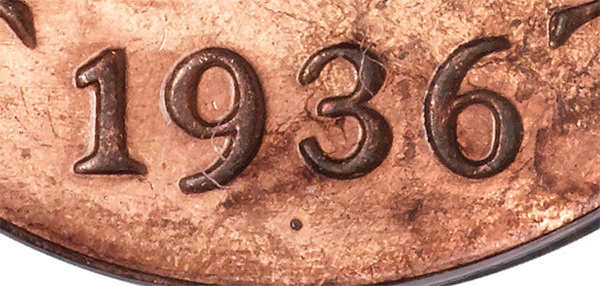
The 1936 Dot penny is arguably the most famous Canadian one-cent coin.
The coin dates from a period of transition between monarchs. After King George V died in 1936, preparations were made for new coinage featuring Edward VIII. His subsequent abdication meant that the Royal Canadian Mint needed to prepare new coins for George VI instead.
A small dot was added to some 1936-dated coins produced during this transition. Only three 1936 Dot pennies are known to exist, making this one of Canada’s rarest coins.
Its rarity is reflected in its auction history. Examples have sold for hundreds of thousands of dollars, with one specimen reaching $445,600 CAD in 2021.
1949: A Small Detail Makes a Big Difference
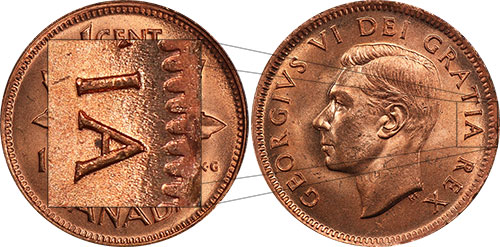
Canadian pennies from the late 1940s can also contain collectible varieties. The 1949 A to Denticle is identified by the position of the second “A” in “GRATIA.” On this variety, the letter points toward one of the denticles around the edge of the coin.
It may seem like an insignificant detail, but varieties like this demonstrate why collectors examine Canadian pennies so carefully. The 1949 A to Denticle can be worth considerably more than a standard 1949 penny, particularly in better condition.
1955: The No Shoulder Fold Penny
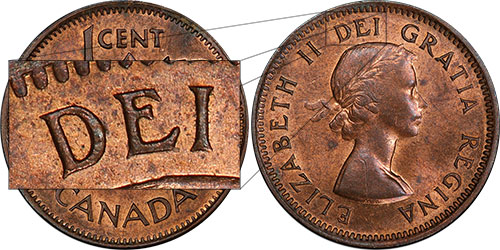
The introduction of Queen Elizabeth II brought another well-known Canadian penny variety.
When the new coins were first produced in 1953, adjustments had to be made to the Queen’s portrait because the relief was difficult to strike properly. This resulted in Shoulder Fold (SF) and No Shoulder Fold (NSF) varieties.
The 1955 NSF penny is the standout rarity. Collectors can distinguish the varieties by examining details around the Queen’s portrait, including the position of the “I” in “DEI.”
In circulated grades, the 1955 NSF can be worth hundreds of dollars, with higher-grade examples worth considerably more.
1965-2006: Modern Varieties
Later Canadian pennies generally aren’t as valuable as their older counterparts, but collectors can still find interesting varieties.
1965: Large Beads and Pointed 5
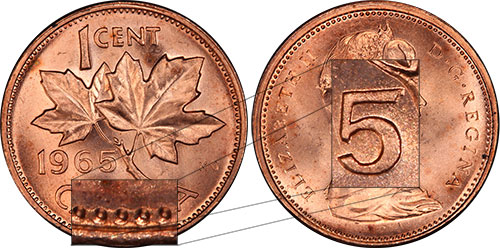
The 1965 penny has several varieties involving the size of the beads around the Queen’s portrait and the shape of the “5” in the date. The Large Beads – Pointed 5 is the most valuable of the major varieties from this year, although it remains relatively affordable compared with Canada’s earlier rarities.
1982: The 12-Sided Penny
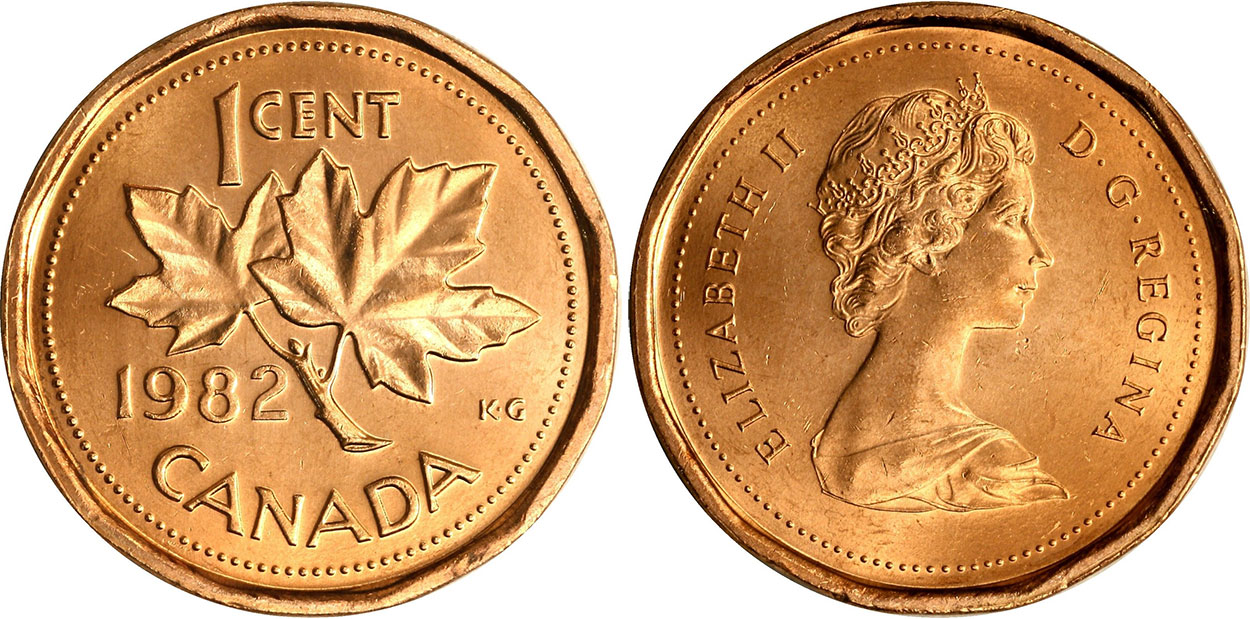
In 1982, the familiar round penny became 12-sided, making it easier for people who are blind or partially sighted to distinguish the denomination by touch. The dodecagonal shape continued through 1996, before the penny returned to its traditional round shape in 1997.
1990: A Canadian-Designed Portrait
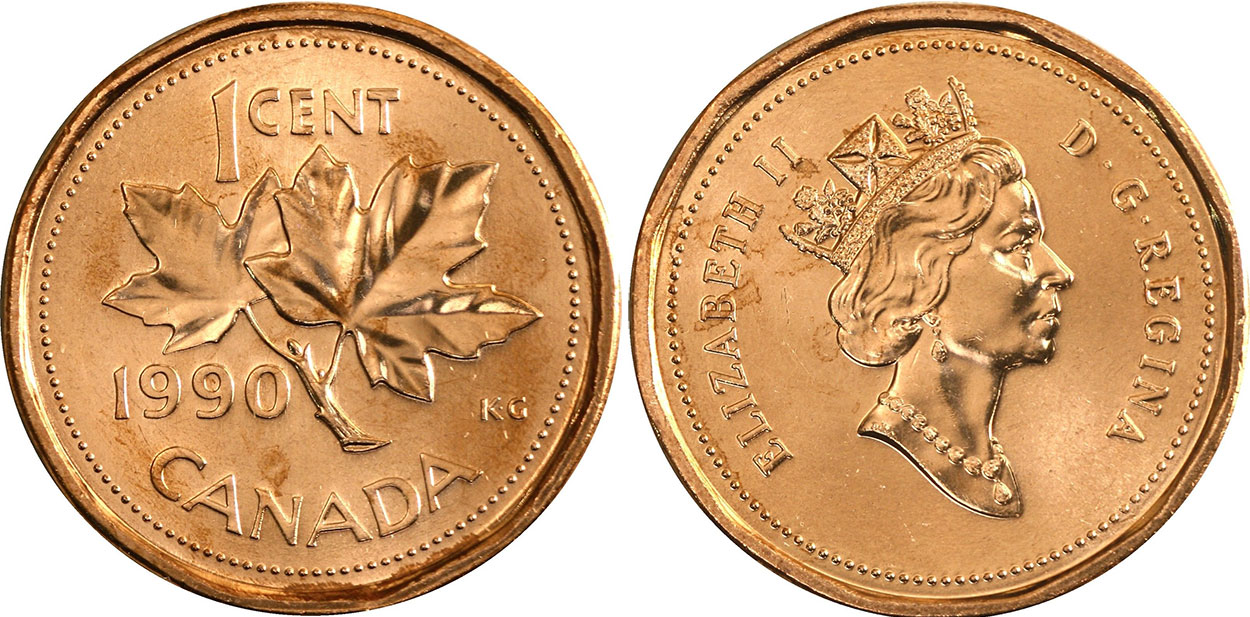
In 1990, the Queen’s portrait changed for the first time since 1965. The new effigy was designed by Canadian artist Dora de Pédery-Hunt, making it the first portrait of a reigning monarch on Canadian coins designed by a Canadian artist.
2006: The Magnetic Penny
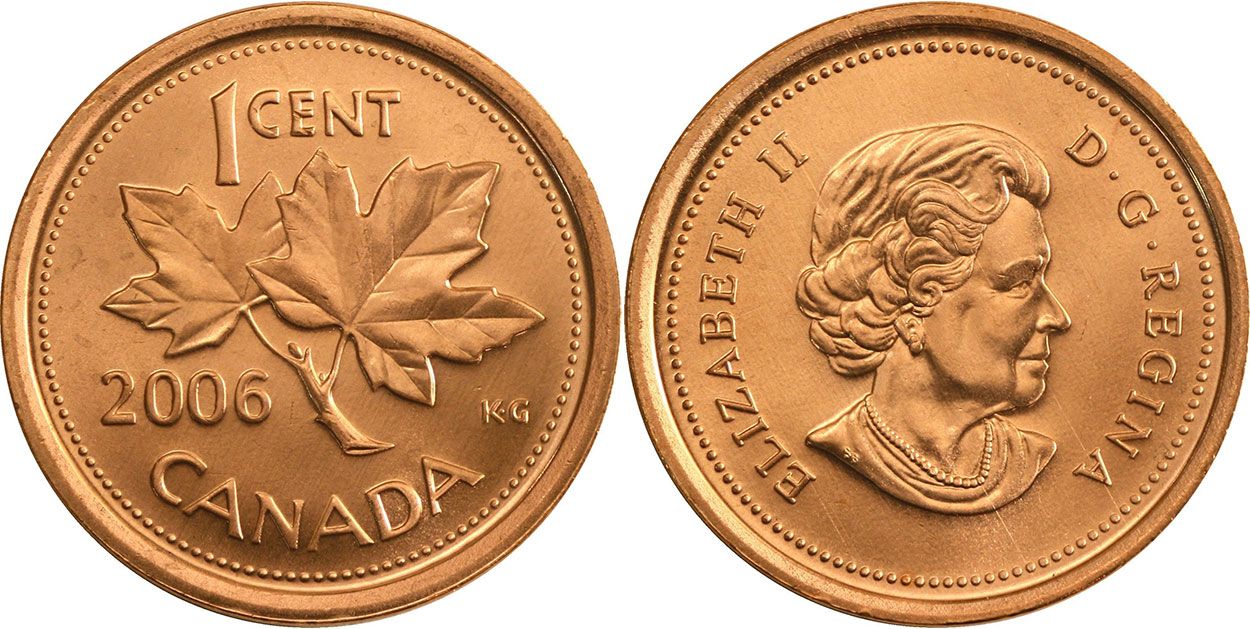
Changes to the penny’s composition in the early 2000s created several modern varieties. The 2006 Magnetic penny is particularly interesting because it was made with a copper-plated steel planchet.
Collectors can identify the variety by its magnetic properties and the absence of the expected mintmark or Royal Canadian Mint logo beneath the Queen’s portrait. Unlike most modern pennies, this variety can carry a premium even in circulated condition.
The 2006 Magnetic penny is a good example of a modern Canadian coin where a small manufacturing detail can make a significant difference to collectors.
The End of the Penny
After more than 150 years, Canada began phasing out the penny in 2012. Rising production costs, the accumulation of pennies in households and the costs associated with handling the denomination all contributed to the decision.
The final Canadian penny was struck on May 4, 2012, bringing an end to one of the country’s longest-running denominations.
Today, most Canadian pennies aren’t worth much more than their face value. But the right date, variety or error can make an enormous difference. From the three known 1936 Dot pennies to the much more accessible 2006 Magnetic variety, Canadian cents demonstrate that sometimes the smallest details can make a coin worth a lot more.
If you think you may have a rare or valuable Canadian penny, contact your nearest Canada Gold location to learn more about your coin. And if you’re interested in adding rare Canadian coins to your collection, visit our sister company, Canadian Coin & Currency, to explore its selection of collectible and historic Canadian coinage.
Photos courtesy of Coins and Canada.